

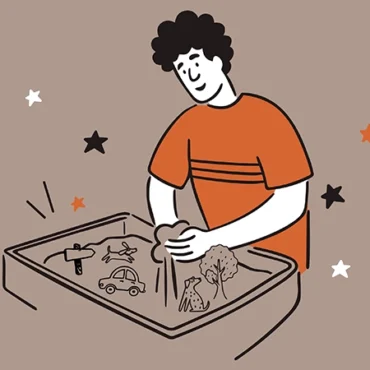






During a session, you will make art, talk, or play (which may be done simultaneously), or you can make art or play in silence if that’s your preference. When making art, you can choose materials that best suit you, e.g., paint, crayon or clay, or you might make a collage. The therapist may sit quietly and pay attention while you make art, or they may make art alongside you, depending on your needs during each session. You and the therapist will also talk and think together to make sense of the thoughts, feelings and experiences that come up during your art-making or when you look at your artwork or play activity.
SOCIAL
EMOTIONAL

EXPRESSION
REGULATION
SURVIVAL
FAQ
Frequently Asked Questions
Every session is tailored to the personal needs and circumstances of each individual. Art therapy sessions can be done individually (one-to-one), in groups, in couples of all sorts of relationships, or with family members.
It depends on many factors like other forms of therapy, such as the client’s commitment level, the therapeutic bond between the client and therapist, and how the client attends therapy. It is also important to define goals at the beginning of the treatment and check-in points throughout going to therapy. These will help track progress, see if anything needs to be adjusted in the treatment plan, and also see if additional treatment or support is needed.
The number of sessions needed can vary based on individual goals and needs. Some people may notice positive changes after just a few sessions, while others may benefit from longer-term engagement.
Art therapy is suitable for anyone! No artistic skills or experience is required. Art therapists are trained to guide you through the creative process, help you become familiar with the materials, and support you to express yourself through art.
Art-making is a significant component of the therapeutic process; however, you will not only create art during an art therapy session. It depends on each art therapist’s practice and your mental health needs. Art therapy sessions may include talking, writing, CBT, bodywork, mindfulness, and other methods.
There are no guarantees with psychotherapy. I work in this field because I have seen people achieve tremendous gains form this kind of work. That doesn’t mean that I can guarantee that every person will be helped, but if what you need is something that I can help with then I will use the best available treatments to do my utmost to help. The length of session depends on the situation.
The cost of a therapy session is determined by each individual needs. However, on average, individual therapy sessions are $200-$300. If you do require a sliding scale, please be sure to book a free 15 minutes consultation to inform therapist and you will both decide on a fee that is suitable for you.


